


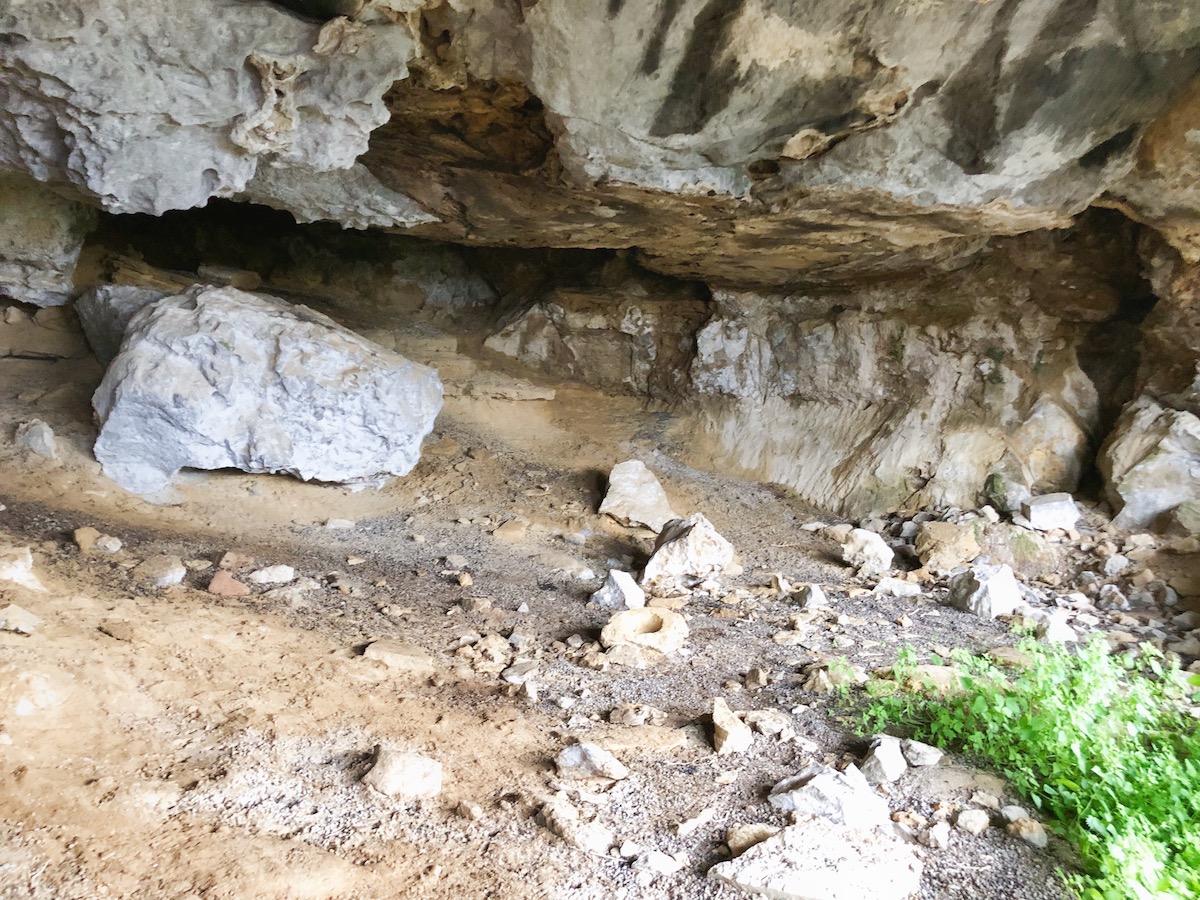
The cave Aspri Petra (translated white stone) is located on a mountainside of the mountain Zini above Cap Routhianos on the east side of the Kefalos peninsula. The relatively small and unspectacular cave served humans as dwelling in the Neolithic (Neolithic) from about 3000 BC.. Here excavations found the oldest evidence of human life on the island of Kos. Much more spectacular than the cave is the area around with a breakthrough in the steep cliffs and breathtaking views of Cap Routhianos and the rugged coastline of the Kefalos peninsula.
The excavations took place in 1922 under the direction of Alessandro Della Sefa, director of the Italian Archeology Institute in Athens. Clay pottery, stone blades, millstones and leftovers were found.
Photos




Map
How to get there
The cave is located on the Kefalos peninsula in the west of the island of Kos, about five kilometers southwest of Kefalos. Follow the road from Kefalos to the south and continue in the direction to Agios Ioannis. Shortly after Kefalos at a roundabout where there is also a road left down to the coast to Kamari continue straight ahead. After a few bends you come to an area looking like a small quarry, here you can park if you want to visit the Ruins of Astypalaia. Shortly after the quarry you come to a crossroads where a road bends right towards Agios Theologos, at this junction turn left towards Agios Mamas. After about 2 kilometers you reach a large rock, there is also a sign that shows the way to Aspri Petra. In the area around the rock you can park your car and walk the rest of the way, if you have an all-terrain vehicle such as a quad you can continue on the gravel road to another sign from which a narrow footpath leads up the mountainside to cave. From here you can already see the breakthrough in the cliff that lies next to the cave.